Indoor season is winding up. For me, one thing this means is it is time to swap out my tires and tubes to use the take offs from the outdoor season as my trainer tires. They will wear out, but that is expected. That said, I always use new tubes, and these days, it is always the Tubolitos. Love the feel of the TPU tubes, and they hold up well for me…
You can buy them on Amazon ( and if you buy them through this link, we earn a small amount that goes towards our efforts to build more content and do more advocacy work )
Tubolito TPU Inner Tubes
Category Archives: Uncategorized
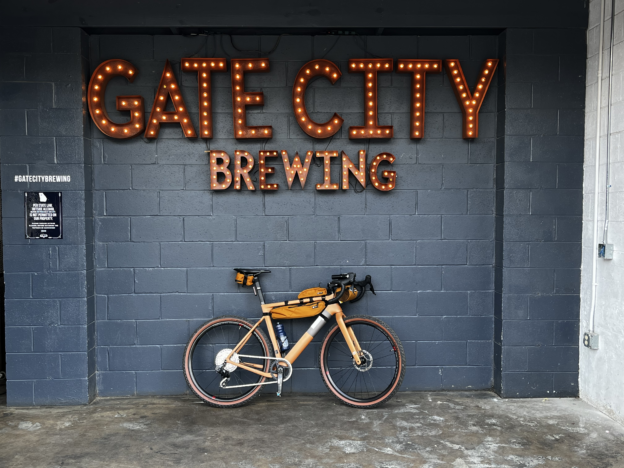
Monday Night Ride – Gate City – 06/12/2022
Notes
Please be aware that several of the area municipalities are doing some extra ‘education’ stops regarding stop signs and stop lights, as well as monitoring groups for abuse of the 2 abreast behaviors. Let us not be the poster child for bad behavior.
Weather
The ride is expected to be: ON
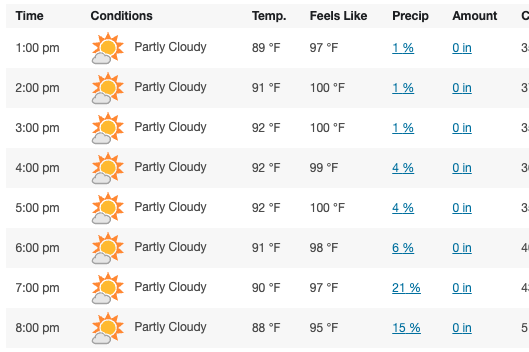
The weather looks to be dry, but absolutely scorching hot for bodies that have not had a chance to acclimate to the heat. Everyone needs to come prepared. Bring water, and some sort of electrolyte additive is strongly encouraged. In addition, because of the expected heat, the speeds should be down a little from normal.
Plea
This is an entirely volunteer ride, from organizing to group leads. We truly appreciate that this ride has become so popular and such a staple for so many riders. However, week in and week out, it is the same core group of volunteers leading rides, often sacrificing their own goals for an evening to make the group better.
This is our plea to everyone. Please consider leading a group, perhaps a group below your ability level once a month in order to allow the other volunteers chances to ‘ride up’ or even ‘just sit in’ some evenings. This will help prevent burnout, as well as allow this ride to continue to grow and remain the vibrant community that it has become.
About
An 18 mile Weekly Group Ride from the Gate City Brewing location at Canton St and Magnolia St in Roswell, GA.
The route is flat by North Atlanta standards. https://ridewithgps.com/routes/28785769
Year round, an early ‘shenanigans’ loop at 5:15 PM and a later Recovery loop at 6:45 PM, with a reconvene at Gate City Brewing afterwards for drinks, and camaraderie as well as the occasional empanada from Ceviche.
The rules are simple:
- ride safe
- be respectful
- harass another rider in the group and you WILL be dismissed and potentially publicly shamed
What Makes a Good Ride Leader
Over the last few weeks a group of people that I ride with as well as do advocacy work with has had this ongoing ebb and flow discussing the idea of what makes a good ride leader. It turns out, this is a really hard thing to nail down, because the definition of a good ride, and how to achieve that is largely dependent upon the goals of the person evaluating it.
Perspective is a strange thing, because when you evaluate anything, your own perspective ultimately colors your evaluation. For example to a driver approaching a ride group, they might evaluate the ability of the ride lead based entirely upon how that encounter works for the driver. To them, a good lead would have the group single file, as far right as possible, and actively working to get the driver around the group as quickly as possible. Meanwhile, evaluated by a rider in the same group who is entirely safety focused, they would view these actions as elevating rider risks and thus be a bad leader. To a rider whose goal is to go as fast as possible on the ride a lead concerned about keeping a group together might be a bad ride lead.
It is a complex discussion, but one that is important to people who are out there organizing rides, working with communities on bike related advocacy, as well as being engaged in the communities themselves. Despite that, these discussions have kind of led me back to a single concept that seems to work well in almost all of the contexts:
_ Pride in the Product _
Conceptually, this single idea anchors everything else in the ‘what makes a good ride lead’ discussion. How you go about that, well, that evolves based upon the goals of the group and is based entirely upon preexisting expectations. When a ride lead sets and expectation, manages the group to meet or exceed the expectation, and engages with the group to get them to those expectations, they are taking pride and ownership of the end result, or in terms of the concept, the product.
In Practice – Some Practical Examples
Case: A Group – Speed, Drop Ride, Pace Line
- Set the Expectation: “This is a drop ride, and will have an average speed above 20 mph. Riders in the group will be expected to take their turns on the front, and we will utilize a rotating pace line”
- Manage the Group: “Start the ride with a nominal neutral warm up” by controlling the pace and letting riders get organized into the pace lines, communicating when the pace will start coming up. Once the warmup is complete, elevate the pace, and start the rotation by moving into the rotation yourself.
- Communicate: “Call out your intentions, when needed engage with riders in the group to encourage them to do their part”.
- Engage: “Check with riders as you rotate to ensure that the group is hitting expectations, and adjust based upon that feedback”
- Post Ride: “Follow up, check on riders that might have struggled or seem to need a bit of encouragement, even it that encouragement is to join a slower group for a few weeks to get stronger and rejoin”
Case: B Group – Pacing, No Drop
- Set the Expectation: “This is a no-drop ride, and will have an average effort equal to a ?? mph ride. Please make sure to communicate if a rider is struggling. We will have regroup points. ”
- Manage the Group: “Start the ride with a nominal neutral warm up” by controlling the pace and letting riders get organized into the group, communicating when the pace will start coming up. Once the warmup is complete, set the pace and identify riders in the group capable of pacesetting so that you can engage within the group.
- Communicate: “Call out your intentions, when needed engage with riders in the group to encourage them to do their part”.
- Engage: “Check with riders as you ride to ensure that the group is hitting expectations, and adjust based upon that feedback”
- Post Ride: “Follow up, check on riders that might have struggled or seem to need a bit of encouragement, even it that encouragement is to join a slower group for a few weeks to get stronger and rejoin, or to move up to a more pace appropriate group”
While these two examples exist, the pattern remains. Set the Expectation, Communicate, Adjust, Engage and Follow Up. Or more simply “Take Pride in the Product”
A Car is Necessary, or is it?
For years I have heard that “You cannot live here without a car” any time the subject of bike and pedestrian infrastructure is discussed, including the concept that a road is in fact bike and pedestrian infrastructure, much to the typical drivers consternation. With “here” being a dynamic thing that generally applies to wherever the discussion is taking place, be it urban, suburban, rural, or no mans land. It is an idea that I as someone that believes in non-car infrastructure usually reject out of hand, but, is my objection really supportable?
In order to understand my objection, we really need to understand the reasons that support the idea that a car is necessary.
- Every place we need to go is too far away
- This is not Europe where everything is close
- We need to carry passengers
- There is no public transportation
- It would take too long without a car
- The weather makes it impractical
While there are many other reasons that get thrown out there, these are the core arguments that we hear used most often. Reading through that list, it seems to be reasonable right? but do they hold up to scrutiny? Before going point by point, let us take a moment to look at some hard data numbers that are relevant.
Commuting
Arguably the easiest metric to evaluate is the commute time and distances that exist today. These distances and times represent what the average person has deemed acceptable, and as such would seem to offer a good reference point.
Time
The United States on average accepts a 26 minute 36 second commute time, each direction. Dedicating nearly an hour a day to the process of getting to and from a job. Since much of my personal advocacy is in the state of Georgia where that number is 28 minutes 24 seconds, the evidence is that here, an even longer number is acceptable.
Distance
While the time is probably more relevant, the distance has some value as well. In the United States, the average commute distance is 16 miles each way. Interestingly, one of the common argument, about how things are more spread apart than Europe, where bike and pedestrian commuting is more widely accepted would lead you to expect shorter commute distances, and yet the average in Europe is 28.5 km, or 17.7 miles in Imperial measurement.
Going Other Places
But what about other important places, like a grocery store? According the the national association of grocers, the average distance to a grocery store is just 4 miles. Schools tend to vary by age group, but even at the high school level the national average trip is just over 6 miles. In fact, the average distance of all combined trips, like errands, meals, entertainment, et cetera is just 9.4 miles.
Occupancy
In theory, the biggest advantage to a car is that it can carry more than a single passenger, and yet 85% of the cars on the roads are single occupancy. That said, this statistic is a little skewed, because what it fails to account for are trips that have more than one occupant for part of a trip. However, these partial trips of multiple occupancy could be offset by non-car transportation, or public transportation if it was offered.
Public Transportation
Sadly, yes, public transportation is severely limited in availability and coverage in the US. So much so that it currently accounts for about 5% of all commuting. To put that into perspective, the bicycle accounts for 6% of all commuting in the United States. This lack absolutely factors into the perception that a car is required.
Speed
Speeds are really where the differences start to show up. While a car is capable of much higher speeds than almost any alternative, the realities of traffic, and the start and stop nature of most of our trips, the real average speed is about 32 mph. Compared to that of an e-bike at 20 mph, or a casual bike at 12 mph, or walking at just 3 mph, the speed certainly does make it easy to think of a car as a requirement.
But is it a requirement?
This is the crux of the issue though. There is nothing in the above data that conclusively supports the car as a requirement. The data presents a case that no, a car is NOT a requirement. We accept a nearly 30 minute transit time. Meaning that for anything less than 6 miles, a bike is acceptable in terms of speed. We do not need to carry passengers 85% of the time, so the car is not needed for those trips. So, really, where is the need? why is it a requirement? The answer is: it is not a requirement.
Convenience
This is the real answer, and this is completely supportable. A car is not a requirement, but it is a convenience. A car makes it easier to go places quickly, and easier to go places further away. Less planning is required, and of course, it removes many concerns about the weather conditions. But these things are all about convenience, and not about requirement.
Exceptions
As per almost any discussion, there are exceptions, outliers that change the equation. There are people for whom the alternatives are simply physically prohibitive. Be it walking or cycling, or even public transportation, there are simply some people that have enough physical challenges that these simply are not options. There also people who would benefit from getting out of the car and engaging alternatives, but who simply cannot consider it due to the fears implicit in the idea that roads are for cars, and that a car is a requirement to live here.
Conclusions
So yes, my objection is fully supportable, and arguably, for the vast majority of the population, the assertion that a car is a requirement really is not supportable from a data perspective. This does not mean that I think we should take away cars, or even restrict them. What it means is that we need to reassess how we as a culture view alternatives, and our infrastructure, and do away with the entire presumption that a car is a requirement, or that a car has a primary right of use to our roadways. We need to return the idea that our roads are pedestrians first, bikes and other lightweight, low speed vehicles second with motor vehicles a distant third in terms of right of way, and right of use.
Should Bicycles be Tagged and Taxed
Also filed under “They don’t pay fuel taxes”
Since the subject of bicycles is in the public eye again due to upcoming law changes, many of the old anti-bike arguments are also raising their heads again. To the point that there are at least two concerned citizens that have decided to push the bicycle tag and tax issue with the state legislature. While it is unlikely that those minds of the people behind those efforts will be changed, it is probably still worth discussing the realities of this idea and proposal.
Why Do People Think This Matters
There are two very different and divergent reasons that are presented in this context. Both are arguably suspect and despite the logical foundations in both, they both struggle to hold up under analysis.
Tags Would Allow For Reporting and Enforcement
As any person that has ever filed a non-contact/non-crash related motor vehicle moving violation other than speed police report can tell you, even with a completely clear license plate, there are several additional issues that prevent prosecution in most cases. Any report also needs to include video of the vehicle operator at the time of the incident.
Even with these bits of information, it is a low percentage of incidents that are pursued by law enforcement, and most of those result in little more than a verbal warning. Making this a very low value in terms of enforcement or altering behaviors.
Tag and Tag Taxes (ad valorem fees) Would Fund Bike Infrastructure
Or, would it? In Georgia for example, new cars no longer pay traditional annual ad valorem taxes. They pay sales tax. So, really, this is about the annual tag fees, and perhaps include the licensing fees., since bikes are also taxed at the point of sale ( at least new, there might be some value to second hand bike sales, but there is no infrastructure to track this ).
Either way, a bit of math can give an idea of just how much this idea might mean. Auto tags are $20 / year. Licenses are $32 every 8 years. That works out to $24 per year, per bicycle and licensed operator. Most estimates of the number of active bicycle users pegs the number at about 34% total. However, for adults, that number is typically 29%, and this type of approach is generally targeted at adult cyclists.
Georgia’s adult population is roughly 8.2 million. 29% of that is 2.4 million. At $24 per year, that would be just $57 million per year in revenue. For perspective, the state budget for transportation ( including non-car transportation ), and bear in mind, this is state roads only. It has low impact upon either federal highways, and cite/county transportation budgets, is just 7.27% of a $28.1 billion budget. Meaning 2 billion in state level transportation projects.
Needless to say, the revenue would not even cover the administrative costs of collection and enforcement, all while being an unfair usury tax upon the people that use a bike because they cannot afford a car, a number consistently demonstrated to be about 66% of bicycle users. A group of users that are also disproportionately at risk from car/bike crashes.
Neither Reason Is Justifiable
Then we get to the Fuel Tax complaint. This one holds up marginally better, right up until the discussion embraces the idea of wear and tear, and paying proportional the wear and tear created. Once this is factored in, it quickly becomes evident that there are entire classes of road users that are dramatically underpaying and being subsidized by all tax payers, and these users are not bicycles.
Roads require maintenance because of mother nature and road use. Moisture and temperature fluctuations are primary factors in the side of mother nature. Vehicular use compounds these factors, with weight and speed have direct impacts upon accelerating the break down of the roadways. The heavier, and faster the vehicles, the more damage they cause.
If you consider the ‘Average’ motor vehicle weight to by ~4000 lbs, and use that as a base line for a predicted wear value as the normal, then looking at vehicle weights and how the weight impacts wear and tear, the heaviest rider on the heaviest bike would have a wear factor of 0.00006. Meanwhile a Tesla Model S would be about a 1.3. What about a Chevy Tahoe at 3.6, or a BMW X5 at a factor of 17, or an Amazon Prime Mercedes Sprinter at a factor 21 when empty?
What this means is that every road user in a vehicle over 4000 lbs is underpaying compared to the damage they are causing, no matter how much gas they buy, and the electric vehicles are not even paying fuel taxes.
In fact, when you look more closely at all of this, it quickly becomes evident that the bicycle riders cannot produce enough wear and tear on a paved roadway to cause it to need repairs before mother nature does the work without them. Or more to the point, they are more than covering their fair share through other taxes.
Conclusion
So while, it all sounds good as a sound bite, and an emotional response, the idea of tag and taxes on bicycles boils down to little more than creating an artificial barrier to using bikes on the roads, and one that would be unable to fund adding bike specific infrastructure. But, making matters worse is the reality of the sport and recreational cyclists that these ideas are really trying to target.
Between the income levels of those riders, and the culture within those communities, if there was any plausible reason to believe that these tags and taxes would alter driver behaviors when there are bike/car encounters, then most would pay it, happily. Of course, it would not change drivers behaviors. This is known, because it has been tried, and failed.
House Bill 353 and Changes Effective July 1
While House Bill 353 may not seem like a big deal, it really is for both cyclists and drivers. Unfortunately, it does not include a large education budget, so getting the word out about these changes is going to fall heavily upon the cyclists in the state of Georgia. So, let us discuss what it means, how it affects drivers and cyclists, and how we can get the word out.
What is HB 353
In short, it is a bill that alters the wording of 40-6-56, the “Three Foot Law” as adopted in 2011 for clarity and detail. In order to understand the changes, we need to first look at the original wording.
40-6-56. Safe distance defined; application to bicyclist. as of 2011
(a) As used in this Code section, the term “safe distance” means not less than three feet.
(b) Notwithstanding any provision of this article to the contrary, when feasible, the operator of a motor vehicle, when overtaking and passing a bicycle that is proceeding in the same direction on the roadway, shall leave a safe distance between such vehicle and the bicycle and shall maintain such clearance until safely past the overtaken bicycle.
What this means is really pretty simple. When passing a bike, on a roadway ( note roadway, not lane, so even in a bike lane, the safe passing space is 3 feet ). This seems clear cut and in need of no clarification, and yet, it does.
Why?
Because sadly, there remains confusion regarding the legality of crossing a double yellow lane marking in order to accommodate the required 3 feet of safe passing space.
That is where HB 353 matters.
40-6-56. Safe distance defined; application to bicyclist. as of July 1, 2021
(a) The operator of a motor vehicle approaching a bicycle shall approach the bicycle with due caution and shall proceed as follows:
(1) Make a lane change into a lane not adjacent to the bicycle if possible in the existing road and traffic conditions; or
(2) If a lane change under paragraph (1) of this subsection would be impossible, prohibited by law, or unsafe, reduce the speed of the motor vehicle to a reasonable and proper speed for the existing road and traffic conditions, which speed shall be at least ten miles per hour less than the posted speed limit or 25 miles per hour, whichever is more, and proceed around the bicycle with at least three feet between such vehicle and the bicycle at all times.
(b) Any violation of this Code section shall be a misdemeanor punished by a fine of not more than $250.00.
There are some big changes here, and they will need to be spelled out to drivers, and to a lesser degree, law enforcement. The expansion of (a) for clarity and detail is much needed, instead of just codifying 3 feet, it details exactly HOW to apply the concept of safe passing. Starting with a requirement for a lane change if possible, which includes crossing the double yellow line ( under the existing obstruction laws that already apply for mail carriers, garbage trucks and similar ). It then continues to clarify how to safely pass when a lane change is not possible. Adopting language aligned with the successfully implemented in the Spencer Pass Law ( 40-6-16 ) regarding the passing of emergency vehicles on the roadways from 2017, when changing lanes and giving the required 3 feet of space, it codifies a speed reduction, 25 mph or speed limit – 10 mph, whichever is greater.
Finally, it also codifies, at a state level the maximum penalty for violating the statute, making this a far easier statue to enforce.
Conclusion and What Comes Next
What this means for cyclists is that the burden is now on us to educate, and get the word out to drivers, to law enforcement, to family and friends. As things stand, the 3 foot law is poorly understood, and this new law is going into effect with relatively little awareness of the upcoming change. To actively educate and promote this new law should reside with all road cyclists.
For convenience, linked is a publicly available post regarding the details of the law for sharing to non-cycling communities, one we need to disseminate as widely as possible:
The Time Change is Nigh…
As per normal, this time of year I like to make a reminder to everyone that with the time change, there will be many more non car road users out on the roads in the evenings, runners, walkers and bicycles. All of the area group bike rides will be back, and the numbers have increased with so many people having rediscovered bicycling during the time at home over the last year of COVID-19. In addition, because of the changes that COVID has brought to how these rides exist ( smaller groups, spread out start times, more distance between riders, no big ‘pre-ride’ meetings ), the coexistence of bikes and cars on the roads is going to be strained even more than it already is. So, let us take a moment to review and understand the laws in Georgia.
A bicycle is a Vehicle
…but not a Motor Vehicle. Georgia creates a distinction between the two, and when the law addresses a Motor Vehicle, it does not apply to a bicycle on the roads.
40-1-1 (75) “Vehicle” means every device in, upon, or by which any person or property is or may be transported or drawn upon a highway, excepting devices used exclusively upon stationary rails or tracks.
Lane Usage
Bikes may ride two abreast, and they may use the lane. Though it does encourage keeping right, the exceptions apply to almost every road someone might encounter a bicycle on ( of note, “The lane is too narrow to share safely with a motor vehicle;” ).
40-6-294. (a) As used in this Code section, the term ‘hazards to safe cycling’ includes, but shall not be limited to, surface debris, rough pavement, drain grates which are parallel to the side of the roadway, parked or stopped vehicles, potentially opening car doors, or any other objects which threaten the safety of a person operating a bicycle.
(b) Every person operating a bicycle upon a roadway shall ride as near to the right side of the roadway as practicable, except when:(1) Turning left;
(2) Avoiding hazards to safe cycling;
(3) The lane is too narrow to share safely with a motor vehicle;
(4) Traveling at the same speed as traffic;
(5) Exercising due care when passing a standing vehicle or one proceeding in the same direction; or
(6) There is a right turn only lane and the person operating the bicycle is not turning right; provided, however, that every person operating a bicycle away from the right side of the roadway shall exercise reasonable care and shall give due consideration to the other applicable rules of the road.
(c) Persons riding bicycles upon a roadway shall not ride more than two abreast except on bicycle paths, bicycle lanes, or parts of roadways set aside for the exclusive use of bicycles, or when a special event permit issued by a local governing authority permits riding more than two abreast.
(f) Any person operating a bicycle in a bicycle lane shall ride in the same direction as traffic on the roadway.
(g) Electric assisted bicycles may be operated on bicycle paths.
Bike Lanes
If there is a bicycle lane provided, and a bicycle is operating in it, a driver must yield the right of way to the bicycle.
40-6-55 Notwithstanding other provisions of this chapter relating to operating a vehicle on a roadway, where a bicycle lane is provided on the roadway, the operator of a motor vehicle shall yield to a person operating a bicycle in a bicycle lane.
Passing
When passing a bicycle, a motor vehicle must provide at minimum of 3 feet between the vehicle and the bicycle. > 40-6-56.
(a) As used in this Code section, the term ‘safe distance’ means not less than three feet.
(b) Notwithstanding any provision of this article to the contrary, when feasible, the operator of a motor vehicle, when overtaking and passing a bicycle that is proceeding in the same direction on the roadway, shall leave a safe distance between such vehicle and the bicycle and shall maintain such clearance until safely past the overtaken bicycle.
Sidewalks
Bicycles are not allowed on sidewalks if the operator is older than the age of 12.
40-6-144 Except as provided by resolution or ordinance of a local government for sidewalks within the jurisdiction of such local government authorizing the operation of bicycles on sidewalks by persons 12 years of age or younger, no person shall drive any vehicle upon a sidewalk or sidewalk area except upon a permanent or duly authorized driveway.
Shoulders
Bicycles may ride on the shoulders of a road, but are not required to, at the discretion of the operator.
40-6-291
(b) Notwithstanding the provisions of Code Section 40-6-50, any person operating a bicycle may ride upon a paved shoulder; provided, however, that such person shall not be required to ride upon a paved shoulder.
(c) Any person operating a bicycle may signal a right turn with his or her right arm and hand extended horizontally or with his or her left hand and arm extended upward.
Impeding / Slow Poke Law
The impeding statute / Slow Poke Law does not apply to bicycles, as they are not Motor Vehicles.
40-6-184. Impeding traffic flow; minimum speed in left-hand lanes
(a) (1) No person shall drive a motor vehicle at such a slow speed as to impede the normal and reasonable movement of traffic, except when reduced speed is necessary for safe operation.
(2) On roads, streets, or highways with two or more lanes allowing for movement in the same direction, no person shall continue to operate a motor vehicle in the most left-hand lane at less than the maximum lawful speed limit once such person knows or should reasonably know that he is being overtaken in such lane from the rear by a motor vehicle traveling at a higher rate of speed, except when such motor vehicle is preparing for a left turn.
(b) Whenever the commissioner of public safety or the commissioner of transportation or local authorities determine on the basis of any engineering and traffic investigation that slow speeds on any part of a road under their respective jurisdictions impede the normal and reasonable movement of traffic, such commissioners jointly, or such local authorities, may determine and declare a minimum speed limit below which no person shall drive a vehicle except when necessary for safe operation, and that limit shall be effective when posted upon fixed or variable signs.
Closing Thoughts
You do not ‘have’ to pass them, you ‘choose’ to pass them.
I would also add, that this year, particularly early, I would expect to find the bikes further into the lanes than normal. As we all know it has been obscenely wet this winter and our roads have paid a heavy price for it. The number of potholes and road edges that are cracked and crumbling is exceptionally high.
Please be aware, and expect bikes on our roads. Be courteous, the vast majority of us are making an effort to extend you courtesy. We are avoding main roads, we are riding to the right, we are riding 2 abreast to short the amount of road we take up making a pass shorter. We are trying to avoid big groups between 4:30 – 6:00 PM ( 6:30 as soon as we have enough light ). Yes many of these riders are doing it for fitness. Others are doing it to get comfortable enough with the distance and experience to commute by bike.
The law makes it clear that bikes have a right to the road, regardless of how you may feel about it personally.
Bicycle Safety, Really What Would It Take?
Bikes and the safe operation of them on our roads is something that is incredibly important to me personally, but also to our world. The brutal truth is that while a car is not a requirement to live in most areas of the world, some form of distance transportation is. When it comes down to it, the bicycle is the most equitable and highest return on investment form of transportation available to us, regardless of where in the world we live. Most of the world grasps this, but in the highly ‘developed’ countries, where the car has supplanted the bicycle, the bicycle has been pushed off the roads, and into a cultural niche that becomes all about ‘sport’ or ‘fitness’ and no longer transportation, despite the statistical reality that the leading use of bicycles even in those countries is in fact transportation.
Yes, even in the United States, where a bicycle is seen as the domain of the lycra clad ‘Lance Armstrong Wannabe’ ‘taking up the road for sport’, the majority of bicycles and bike trips are still transportation. Our infrastructure, and cultural biases do not reflect that reality. So skewed is our perception that in the eyes of American Culture, the Full Size Truck with an average cost of more than $40,000 new is the symbol of the Working Class Man, but at $2,000 bicycle is the symbol of Bourgeois Excess, and the $500 bicycle is a Walmart Toy.
Because of this, our infrastructure has been shaped to our perception. Cars are given a greater right of access, if not legally, it is true in use and enforcement. It is so subtle and pervasive in perception that even in advocacy there is a tendency to push for ideas that defer to the car primacy at the sake of real road safety. Things like bike paths and bike lanes are wonderful, and just because they defer to cars does not mean we should not implement them. However, the implementation of them should not come at the cost of the bicycles right of use and more importantly right of way on the roads themselves, regardless of the additional infrastructure.
Why?
Well, there is a lot of meat in this, but rather then delve into that right away, let us take a step back and consider context. This morning a friend posted to a local cycling group a discussion of how cyclists can increase safety around cars on the road? Just the context of the question demonstrates the subtelty in how pervasive the cars primacy is. The presumption is that cars operate on the roads in such a dangerous manner, and with so little respect for cyclists on the roads that the onus shifts to the cyclists to protect themselves. Then you get into the discussion responses, and it becomes even clearer.
No Earbuds. Use lights, day and night. Use a mirror for rearview. Garmin Varia radar ( rearview, but technology ). Act like you are invisible. Ride in groups. Avoid busy roads. Ride at low traffic hours. Flashing Lights. High Vis Colors and Clothing. The common theme? Roads are for cars, cars are presumed to have the right of way, cars do not respect the right of way of bicycles.
That is the second class of comments in these discussions of course, those comments that directly address this. Ride defensively, be aware at all times. Take the lane. Do not ride on the white line. Ride in groups to force cars to respect the space. All are strategies to force a class of vehicle to honor the law, not the cultural perception of the law.
With a bit of context from within the cycling world, it is easy to see the appeal of bike lanes and paths, because they are effective at making people feel safer and creating seperation. Of course, out of sight, out of mind also applies. When you live in advocacy, you learn about the idea of conflict points, and the sheer volume of crashes that occur when cars do not have to think about bikes, and then turn across their paths, through these lanes and paths because they never even consider that a bike might be in them. There are other factors, like on street bike lanes creating a perception of a wider travel lane which translates to higher ambient travel speeds ( regardless of posted limits ), high costs of implementation, poor maintenance, etc.
What Has to Change?
For the most part, the laws are on the books in many states. Georgia’s bicycle laws really do not need massive revisions, as they already grant the majority of what is needed. Perhaps higher penalties for failure to honor them and perhaps remove the entire Far Right As Practicable, since it creates more confusion than it provides in clarity. What does not exist today is, consistant enforcement, driver awareness, and a culture that accepts and respects bikes on the roads. These things are intricately tied together.
The common answer to this is ‘education’, which, while accurate, is also borderline useless. Generally, education is an easy answer. Slap it in drivers training manuals, add it to drivers education curriculum, ask a few questions about it in the drivers exams and call it a day. This only impacts new drivers, and without reenforcement and enforcement, the cultural perceptions will override that education within years, often, just months. Just consider the number of people that struggle with the use of a round about. So, that answer is simply not enough.
What has to change is engagement. Cyclists have to come out of the closet and assert themselves. We need to be reactive when things go wrong. We need to be proactive before they do. We have to engage that family member that we normally avoid the discussion with because they are convinced that roads are for cars. We have to pester our civic leaders, city, county, state, federal to change the habits of enforcement. We have to push those leaders to get the law enforcement agencies on the same page as the law, and to enforce the law consistently. We have unify behind a single message that we belong on the roads, we have a right to the roads, and we expect that right to be enforced.
And when we get pushback, we have to back our fellow riders in the public forum.
In Summary
If there is to be change, it has to start with the cyclists. It has to be all of the cyclists, and even though the typical sport cyclist may not grasp the nuances of the transportation cyclist, the sport cyclists have the money, time, contacts and influences to spark and push real change to the betterment of ALL cyclists.
As someone who has spent 20 years advocating for bikes, the messaging has been too fragmented, and spread too thin across not enough engaged people. I ride in an area where we have over 2000 active, recreational cyclists that ride in groups rides within a 40 mile radius. Out of those, less than 20 are consistently engaged with thier communities, civic leaders and even in public non-cycling forums regarding cyclists rights. Less than 1%.
If you read to here, then did you notice the game played? Consistantly is inconsistently spelled throughout, just because I can, oh, and that I cannot spell 🙂
Dear Drivers,
I am a cyclist.
I hear that you do not like me.
I have been told that I make the roads more dangerous.
I have been told that I break the law all the time.
I have been told that I am arrogant and rude.
I have been told that I should be licensed.
I have been told that I should be insured.
I have been told that I should be tagged.
I have been told that I should be run over.
I have been told that I am not a heterosexual man because I bike.
I have been told that I should not wear functional lycra on the bike.
I have been told that I don’t deserve to breathe the same air as others.
I have been told that I should kill myself, because I ride a bike.
I have been threatened by people with cars.
I have been hit by people with cars.
I have been hit by things thrown from people in cars.
I have been threatened with a gun, by a person in cars.
Despite all of this. I still ride my bike. On the roads. Abiding by the applicable laws. Laws that I have put time and effort into learning and understanding, because few law enforcement officers have, and even fewer drivers have. I also drive a car. And a motorcycle. Sometimes even a truck with a trailer. I have been ‘trapped behind slow cyclists’ on the roads too.
I am going to say something blunt:
Too many drivers drive like assholes without concern or care for any other road user. High speeds, aggressively passing, high levels of distraction, tailgating, rolling stop signs, illegally passing at intersections, blocking the visibility to others.
All of the vitriol and anger toward cyclists? It is a lie.
Take bikes out of the equation, and automotive deaths still exceed 35k per year.
Cyclists, and bikes on the roads are not the problem. Cars and drivers are.
So really, why should I as a cyclist, give a rats ass about what you think?
I shouldn’t. But I do. Because you are operating a 4000lb cruise missile on a road that my taxes helped pay for, and all you can think of when you see me is how much you hate me, simply because I am riding a bike.
So the next time you come up behind me, and you feel the need to express your displeasure, keep in mind this: I probably know more about the laws pertaining to bikes than you do, I am more vulnerable than you are, and thus more aware of what I need to do for my safety, and that in your rush to judge me and my behavior, whatever you are about to do or say likely demonstrates that you are the asshole in the equation.
So, when I wave back with my happy wave, understand that what I am really thinking is that I don’t care about what you think, and a middle finger salute is far more appropriate, but that would not be courteous or polite, so a thumbs up and a smile is your response, because I don’t hate you, I just think that you are behaving like an asshole. Again.
A Social Distanced Real World 5k and 5 miler
Let’s do this. Like most runners who enjoy race day, this year has been tough. Few races, and even the ones that have gone on have been uncomfortable. And virtual races have been fun, but just a different vibe and feel. Then some friends put this together, and well, it’s the best of both worlds for me. Everyone is racing on the same course. We are being timed by the same system. But we get to do it within a time frame, and have real results.
Game On.
Even better is that it is a course many area athletes have trained on, but never actually raced on.
So. Columns Drive, here we come. Register and get your race on with me.
https://www.5atcolumnsdrive.run/
I’ll be doing both the 5k and the 5 miler on different days. I’m slow, so show me how slow I really am.